

CarFax vs. AutoCheck: It's Not Even Close
When dealerships only provide AutoCheck, we pull CarFax ourselves. Here's why.
If you're shopping for a used car, most dealerships will provide either a CarFax report or an AutoCheck report. Most buyers glance at it, see green checkmarks, and feel reassured. But here's the thing: the car shopper does not choose which report the dealership provides. The dealer picks it, and buyers just accept what's provided.
While shopping on behalf of our clients, we never like to see a dealership only providing an AutoCheck report. Why? Because we have seen time and time again that CarFax shows more information about the car's service history and (more importantly) more information about the car's accident history.
When a car dealership only provides an AutoCheck, we pull the CarFax report ourselves.
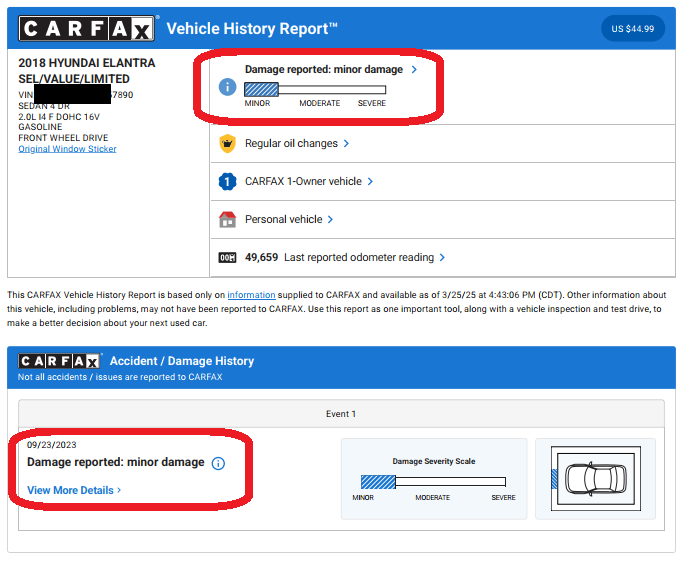
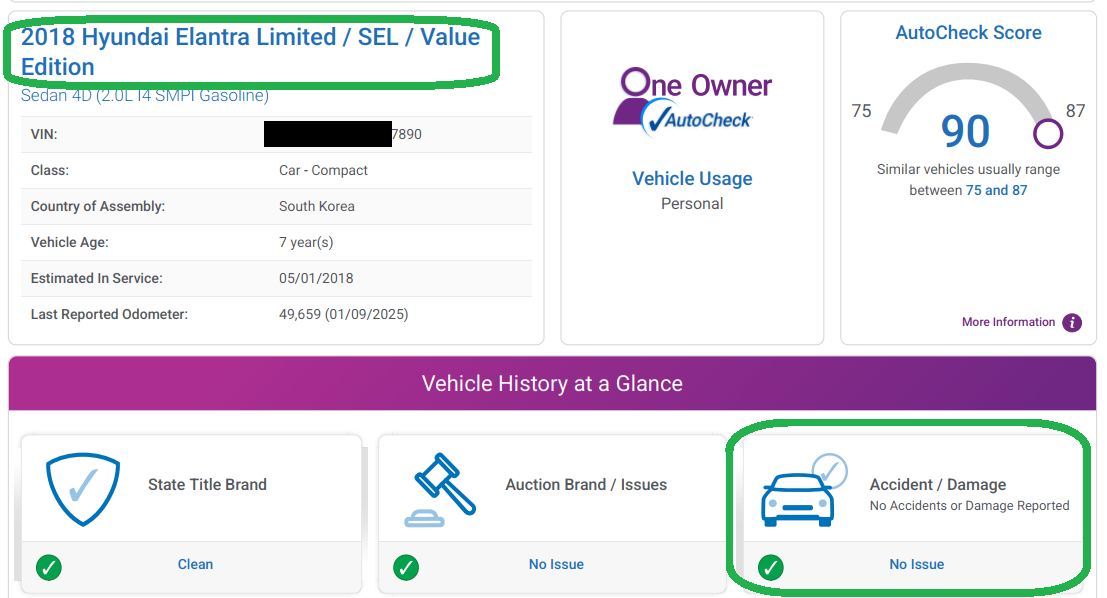
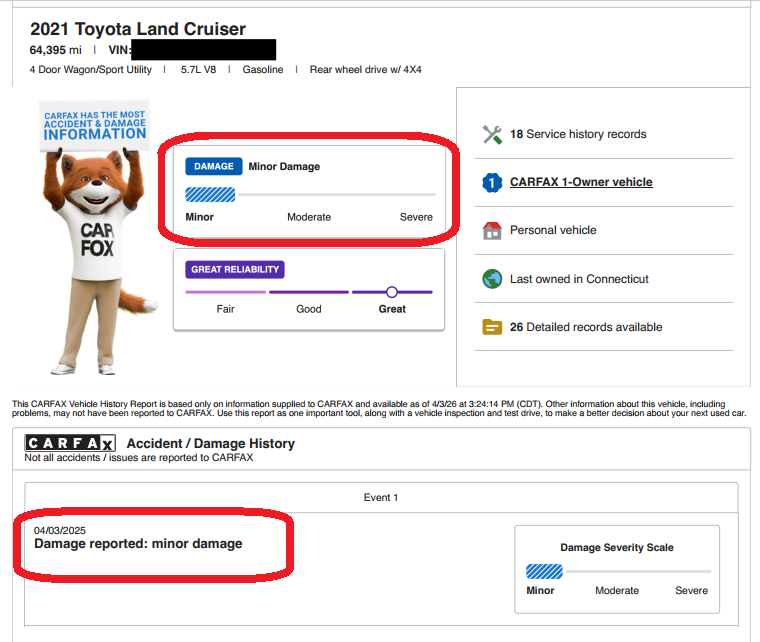
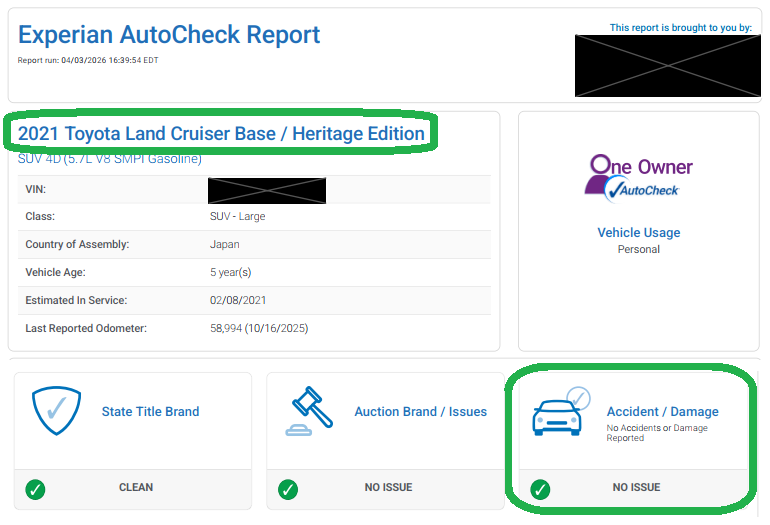
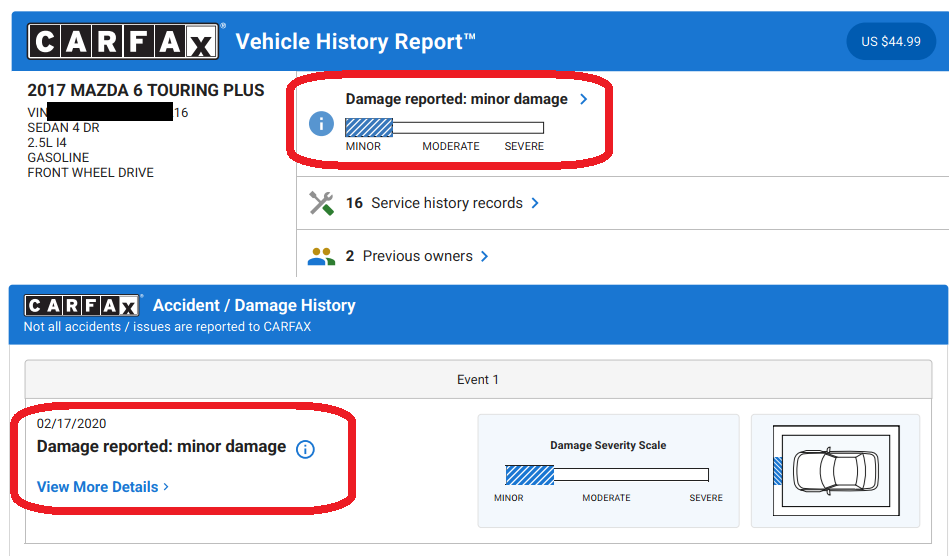
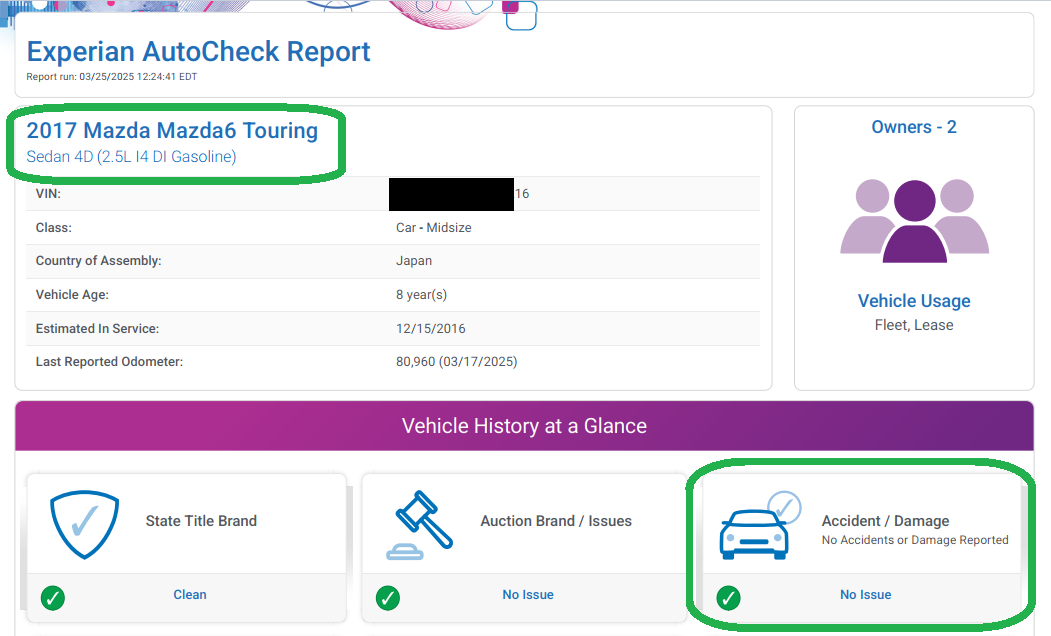
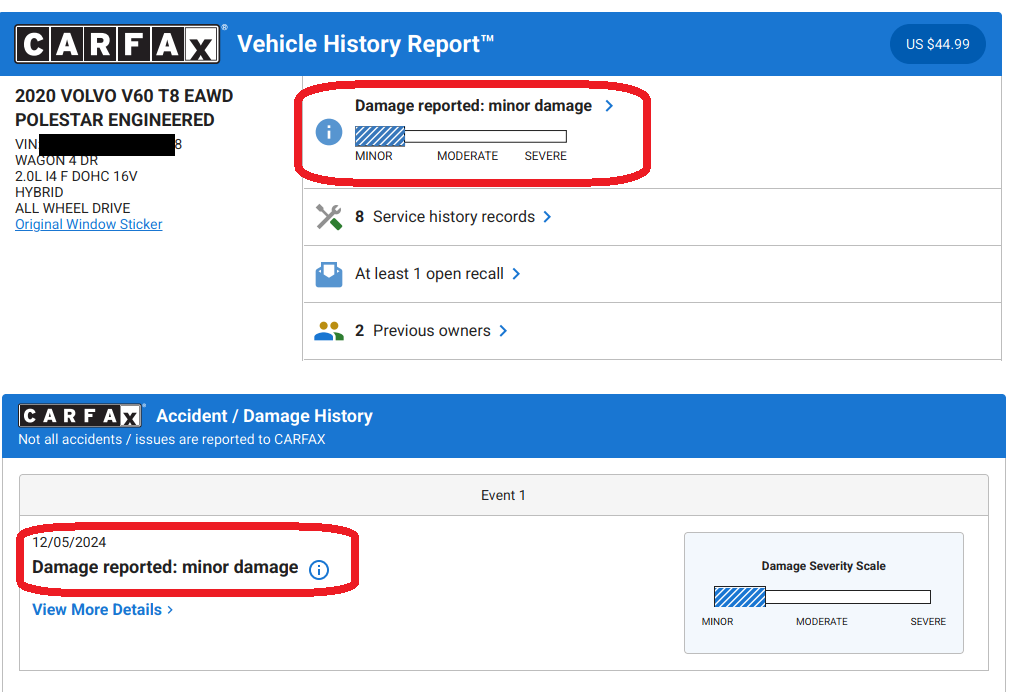
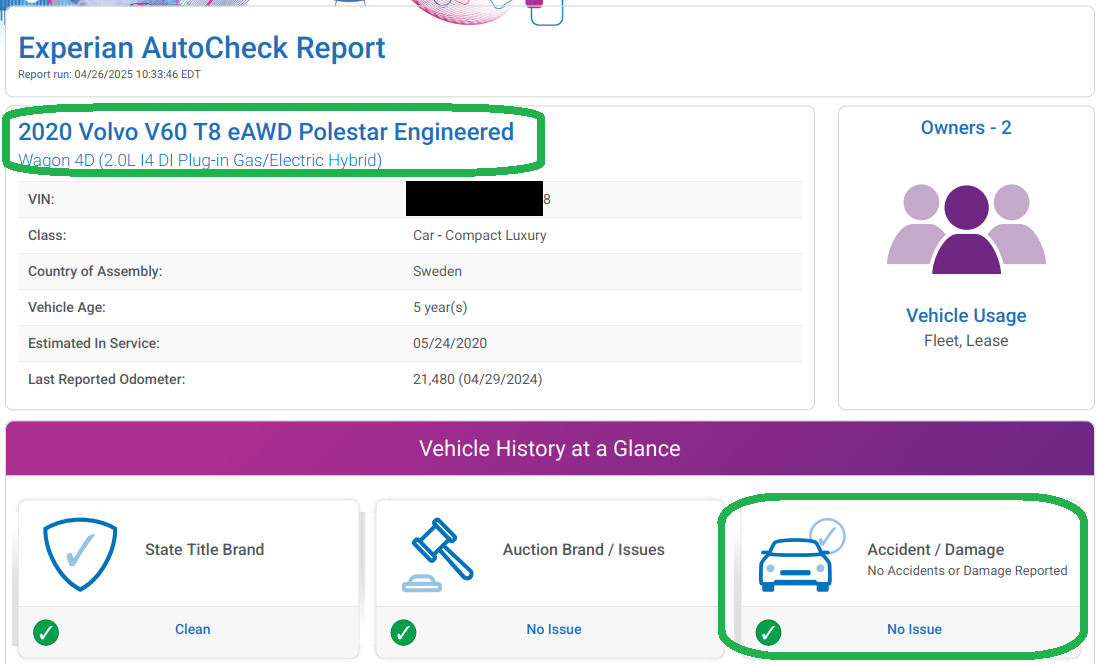
Four vehicles. Four contradictions.
Here are four examples. Each vehicle came with a dealer-provided AutoCheck showing a clean history. When we independently pulled CarFax reports for our clients, every single one revealed minor damage with a specific incident date. In three of the four cases, both reports were pulled on the exact same day, ruling out any timing explanation for the discrepancy.
So why does this matter?
It's not just about a line on a report. There are real consequences.
First, money. If a car has damage on its history, it's worth less. Period. And if you don't know about it, you're paying full price for a car that isn't worth full price. Even worse, when you go to sell or trade it in, the next buyer's CarFax will show that damage. And now that loss falls on you.
Second, what was actually damaged? "Minor damage" on a CarFax doesn't always tell you the full severity, and what counts as "minor" versus "moderate" can be subjective. But here's what does matter: where the damage is. There's a big difference between damage to a bumper, damage to a driver's door, and damage to the front end of a vehicle. Where the damage occurred tells you the level of risk and whether the repair work needs to be examined more closely. And if you never saw the vehicle history report that flagged the damage in the first place, you'd never even think to ask, or look, and that's not a consumers fault.
Third, if the damage wasn't repaired properly, you could be driving a car that doesn't perform the way it's supposed to in another accident. That's not a financial risk. That's a safety risk.
A vehicle history report isn't just paperwork. It's information that affects what you pay, what you're actually getting, and whether the car is safe to drive.
Practical takeaways
So what should you do about this? It's actually really simple. If a dealership gives you an AutoCheck or doesn't offer any report at all, ask them to pull the CarFax; if they refuse, honestly, it's kinda a yellow flag for us, is it about money? Are they trying to hide something? If a dealership only offers an Autocheck, we pay to pull a Carfax report for our clients because we want them to have the best report available. And in my opinion, Carfax is the best.
If you are buying a used car on your own, and the dealership is only offering an AutoCheck but you would like help short of our full service, please reach out! We have a CarFax review service, where we pull a CarFax report and review it with you.
Bottom LineTrust, but verify... twice
Vehicle history reports are useful tools, but they're only as complete as the data that feeds them. Our four-car experience isn't a comprehensive study, but the pattern is hard to ignore: four misses on damage events across four different vehicles and four different makes.
Spending extra money on a CarFax might feel unnecessary. After all, the dealership already gave you another report - they wouldn't leave anything out... right? Right?
But compared to what you're spending on the car - and compared to the risk of missing an incident that could cost you real money down the road - a CarFax report is nothing. It's the cheapest insurance you'll ever buy on a used car.
The views expressed are based on our experience and do not represent a comprehensive comparison of CarFax and AutoCheck services. Based on CarFax and AutoCheck reports reviewed in 2025-2026. Always conduct your own due diligence before purchasing a vehicle.
When you are ready for a new or used car, we'll help you do it the smart way: not the dealership's way.
Your Car. Your Terms. YourCarHaggler.com
Contact Your Car Haggler →